

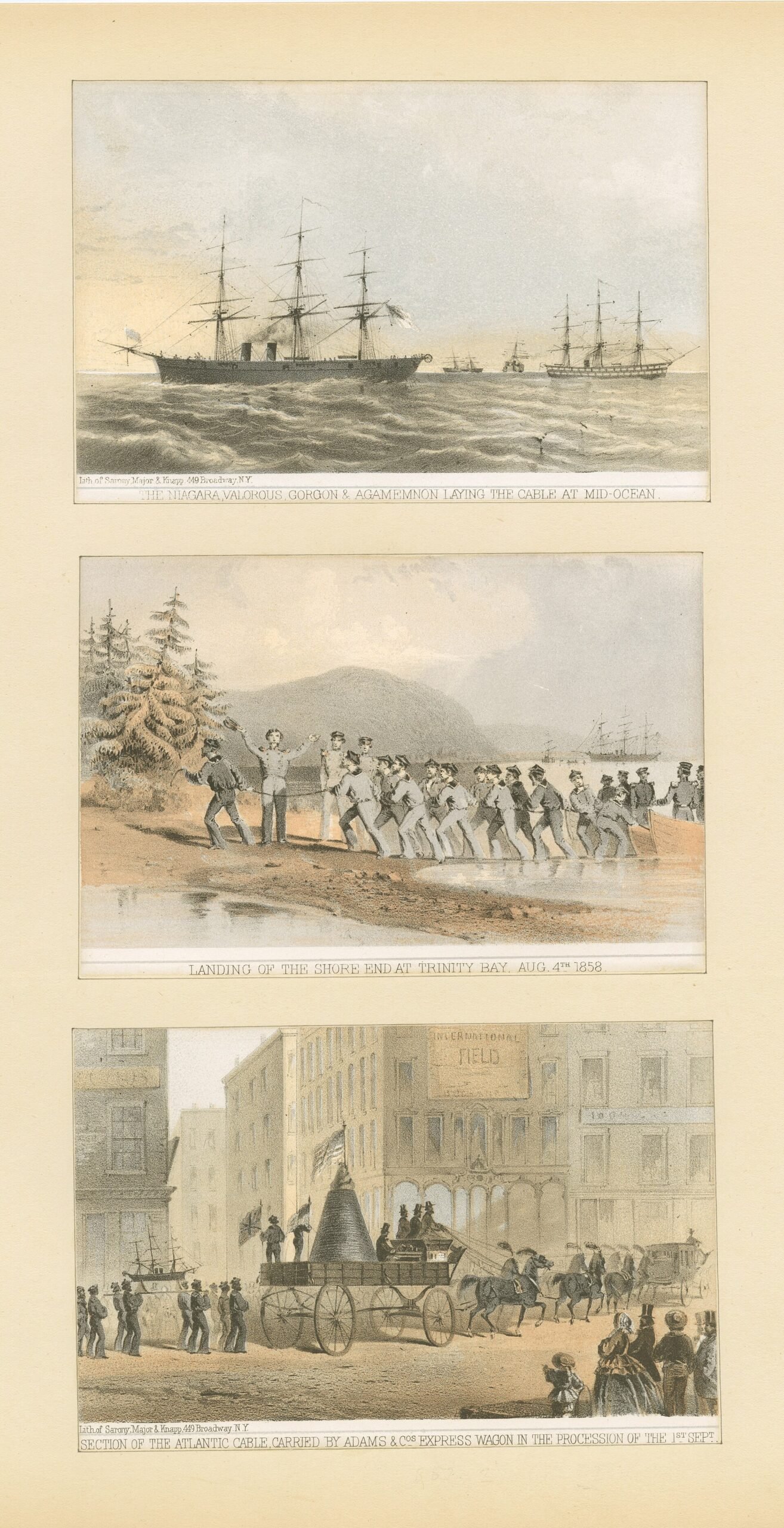
The internet feels like it lives in the sky — in clouds and satellite beams — but almost all of it swims. Roughly 99 per cent of intercontinental data traffic moves through fibre-optic cables lying on the ocean floor, bundled strands barely thicker than a garden hose that carry the world’s messages, money and media. For decades these cables were a triumph of quiet engineering: privately owned, lightly guarded and almost never discussed. A series of suspicious damage incidents in the Baltic Sea, the Red Sea and around Taiwan has ended that obscurity.
The vulnerabilities are structural. Cables cross contested waters at known locations — operators publish route maps for mariners — and most damage, even now, is mundane: anchors dragged in storms, fishing trawlers, the occasional earthquake. Repair is slow and specialised; only a few dozen cable ships exist worldwide, and a single break can take weeks to fix while traffic reroutes around it. The International Cable Protection Committee, the industry body, has long documented that accidental damage dominates the statistics — which is exactly what makes deliberate interference hard to prove and attractive to attempt.
Governments Wake Up
Policy is catching up with the plumbing. NATO has stood up a dedicated centre for undersea infrastructure security, the European Union has funded cable-protection programmes and route diversification, and several governments now screen cable investments the way they screen ports and power grids. Route planners increasingly weigh geopolitics alongside geology: avoiding chokepoints like the Red Sea and the Luzon Strait costs money but buys resilience. Market trackers such as TeleGeography count hundreds of active systems, with the newest built by the cloud giants whose data centres the cables feed. Follow the technology story in our technology coverage.
Resilience by Design
The Repair Fleet Is the Real Bottleneck
If a crisis cut several cables at once, the world would discover its scarcest asset is not bandwidth but ships. The global cable-repair fleet numbers only a few dozen vessels, ageing, booked months ahead, and concentrated in a handful of companies and ports. A severed cable joins a queue; a severed region waits. Governments have begun treating repair capacity the way they once treated strategic oil reserves — mapping the fleet, worrying about its ownership, and in a few cases subsidising standby arrangements. Insurance and permitting add their own delays: a repair ship may need clearance from the very coastal state suspected in the cut. The resilience debate, followed to its practical end, is about dry docks and deck crews as much as geopolitics. The internet’s physical backbone turns out to have a merchant marine, and it is smaller than anyone planning for a crisis would like.
The legal map is as tangled as the physical one. Cable law descends from nineteenth-century treaties written for telegraph wires, and its protections in international waters rest on customs that assume accidents, not adversaries. Deliberate interference in peacetime occupies a grey zone — below the threshold of armed attack, above the reach of ordinary law enforcement, in waters where evidence sinks. States are drafting their answers: critical-infrastructure designations, coastguard escort doctrines, and attribution statements issued with increasing confidence and specificity. The cables carry the world’s money, messages and machine traffic; the law governing their protection is being written now, reactively, incident by incident — which is how maritime law has always been written, except that the stakes have never been this total.
Engineers’ answer to fragility is redundancy: more cables, more diverse landings, smarter monitoring. Fibre itself can be a sensor — tiny disturbances in the light signal betray a dragging anchor or an approaching vessel — and operators are beginning to use that capability to watch their own assets. Satellites will absorb some overflow but cannot match fibre’s capacity at anything like its price. The cables, in other words, are not going away; they are being promoted, reluctantly, from invisible infrastructure to strategic asset. The world’s data will keep swimming — now with an escort.
